Group
Backrooms Botanist Authority
Group dedicated to botany, also known as phytology, which is the study of plants
The Backrooms Botanist Authority is a group dedicated to botany, also known as phytology, which is the study of plants. While they study all types of biotas, as their name suggests, the vast majority of their research is focused upon botany. Due to their years of priceless research on plants within the Backrooms, they are the number one authority for florae within the Backrooms. They have roughly 1,700 members. As a group they are tight-knit, with a set hierarchy and regular collaboration. They are notably non-hostile to virtually all groups, excluding particularly hostile ones such as THP and the AEG. They were founded sometime in 1952. They use multiple currencies, primarily the USD.
Leadership
They have a distinct hierarchy designed for organization and co-operation. The hierarchy is as follows:
+ Hierarchy - - The Leader is the highest possible position in the BBA and is the head of the Flora Council. Currently, the position is held by Janice Green, who has held the position since 1994. - A council of 20 people who do most of the administration work. Elected councilmen and councilwomen can be a part of any other rank. Currently, 18 of the 20 seats are filled. - These councils are lesser councils that are tasked with more direct administration of existing bases. This also includes the Reconstruction Program. - These workers are essentially the IT of the BBA, working to keep technological systems fully functioning at all times. - These are one of the most esteemed positions in the BBA, despite being lower in the hierarchy. They tend to the many plants and conduct studies, especially on the Almond Dew. - These are the BBA-owned business managers, which help maintain the economy. They also provide necessary goods. - These are the citizens of the colonies, the bricks that hold the BBA together. They are the lowest in the hierarchy.
Bases
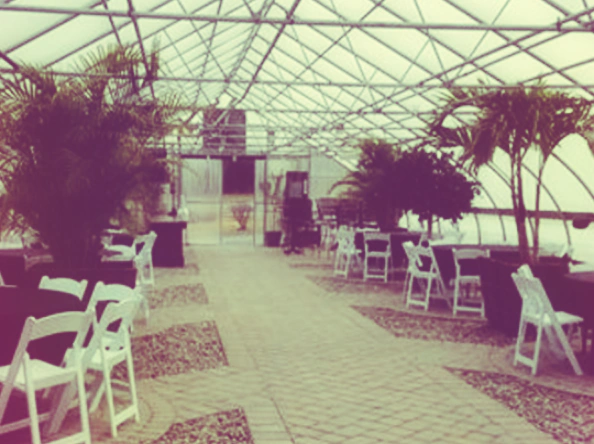
The largest base of the BBA, and its most important, housing its leadership and the vast majority of its members. Focused on the study of general flora within Level 13 and administration of the group. They occupy an area of roughly 250 hectares, located roughly 20km away from the initial starting point of Level 798. They are constantly open to new members here. The most accessible base by and large. They reside in a series of greenhouses deeper within the level, occupying a space of roughly 120 hectares. They are open to new members. They are dedicated to recruiting new membersl Five individual members in Level 989. Despite certain factors, communication can be facilitated with Walkie-Talkies. Focused on the study of A. Clarifex. Prior to The Flicker, the BBA had 12 bases spread throughout levels; these bases were significantly damaged and only ~50 stragglers emerged per base. Major reconstruction efforts with the help of other groups have shown success, and these bases are being rebuilt. However, this process is nowhere near completion, so it is listed as one base. The most notable was Base Sanko, which had roughly 190 members and resided in Level 145.
Base Biota (~1,380 members), Level 798
Base Foliage (~1,130 members), Level 13
Base Erosion (5 members), Level 989
Reconstruction Program (~540 members), various levels
Armed Forces
Whilst the BBA does not partake in violent conflict, they do maintain a small self-defense force, known as the Roses' Thorns. It is a small but well-equipped mostly volunteer force. While no training facilities are provided, they typically go to places like Level 73 or Level 40 for target practice and Level 10 for training on how to forage. While no larger than 350 persons at any time and only ever reaching a maximum of 750 persons during The Flicker, they are well equipped, and presumably would put up notable resistance. The Roses' Thorns have never been involved in any military engagement with other groups, however they have shown sufficient prowess in warding off entities during The Flicker, keeping Base Biota and Base Foliage alive and fairly unharmed, at the cost of their other bases being significantly weakened.
Royal Exploration Unit
While the BBA and the R.E.U. have no official relationship, diplomatic correspondence is ongoing, and it is believed a deal is soon to be struck. Recently, leadership from the BBA has reached out to the R.E.U. in order to establish correspondence. Notably, during The Flicker the remnants of a Base Foliage group in Level 143 were permitted to stay in the R.E.U. colony of Copperfield, and later the BBA sent the colony a handful of Almond Dew plants as an unofficial thank-you gift.
Anti-Entity Group
In the pre-Flicker Sanko Affair of 2002, Base Sanko got caught in the crossfire of an AEG attempt to exterminate the Bakemono residing in the level. Incendiary weapons were used, which caused Base Sanko to catch fire, causing 12 casualties before the fire was controlled and stopped. Rebuilding took roughly 3 weeks. The AEG has to this date never apologized, and thus the AEG is one of the few groups the BBA is on bad terms with.
Major Exploration Group
The M.E.G. has historically had good relationships with the BBA, with frequent trades and co-operations becoming commonplace especially in the 90s. However, after a relationship with the Republic of Aurielle began, the M.E.G. withdrew their relationship, and now trade between is mostly unofficial and between specific members. Very rarely now do the M.E.G. and the BBA collaborate.
Republic of Aurielle
The Republic of Aurielle began a friendship with the BBA shortly before The Flicker began. During The Flicker, the BBA saw an opportunity to better relations with Aurielle and took in ~250 Aurielleno refugees from Navarro in Base Biota, helping them recover. Later, after both Level 150 and Level 13 stabilized, 210 of these refugees returned to Aurielle; the remaining 40 stayed behind and became members of the Roses' Thorns. Today, Aurielle is a key source of equipment for the Roses' Thorns, and the occasional shipment of Almond Water harvested from Almond Dew is directed towards Navarro.
Almond Water, Inc
Almond Water, Inc. has a fair relationship with the BBA, with the only issues being Almond Water, Inc. occasionally fining them for producing Almond Water, even though it is technically a natural product of Almond Dew. Typically, they are found helping each other in peaceful levels.
Notable Equipment
While most of their equipment is imported, they have access to an extremely useful plant called the Almond Dew (Amygdala rorificentia). This plant is otherwise indistinguishable from the common fern, but notably produces dew that consists of 13-15% filtered water and 87-85% pure Almond Water. This plant is farmed in large quantities in Base Biota, and to a lesser extent in Base Foliage. This produces them roughly one bottle of Almond Water ever 30 seconds.
Sources
Adapted from the original article, under CC BY-SA 3.0.