Place
Level 38
Environmentally hazardous level notable for its terrible air quality
Level 38, colloquially referred to as The Polluted Orange or Air Pollution, is an environmentally hazardous level notable for its terrible air quality. It is also known as the 39th level of The Backrooms. =Description=
Level 38 is a finite town surrounded by water, featuring a mix of residential buildings, open plazas, and brick pathways. The architecture blends elements from Mexican, Omani, and Turkmen styles, with white, block-like structures accented by touches of gold and silver. Most notably, an intense orange hue saturates the entirety of Level 38, with odor pollution caused by poor air quality. There is no clear day or night in this level, as a thick haze blocks out any natural light and keeps the town in a constant, muted brightness.
Strong winds have uprooted most of Level 38's plant life, which comprises sparse clusters of palm tree and long rock gardens lining walkways. pollinators, none of the vegetation is able to produce edible fruit or seeds. How certain plants manage to survive in these conditions is unknown. Level 38 may have only recently started to experience its current environment.
Beyond the shoreline, navigation over the ocean becomes increasingly unreliable. Landmarks frequently shift position—objects that appear close can suddenly seem distant or reappear in their original place moments later. Attempts to travel in a straight line often result in wanderers unknowingly returning to their starting point. Compasses malfunction, GPS devices display impossible coordinates, and all standard navigation tools fail to provide consistent results. In these conditions, the fog ensures that any sense of direction is quickly lost.
Out on the water, random metal objects sometimes float by. There are old buoys, rusty anchors, broken propellers, or pieces of machines that no one recognizes. They sit on the surface, not moving with the waves. If anyone tries to grab one, it sinks out of sight, only to turn up somewhere else later on. Any piece brought back will be covered in rust and decay, much worse than it should be, and nobody has figured out why.
Farther from shore, strange sounds fill the air. Voices whisper from the fog in unknown languages. Chains drag across metal, bells ring in the distance, and bursts of static crackle in and out. When someone tries to record these noises, they stop. Most who know this place say not to follow or answer the voices—many have gotten lost chasing after things that aren’t there.
The fog itself isn’t normal. Throwing something into it usually means it vanishes right away, but sometimes there’s a thud, like it hit something hidden. Occasionally, a flash of light reveals the outline of a crane or a tower, but these shapes disappear as soon as they’re seen. No one has managed to reach them, and it’s not clear if they’re real at all.
After enough time on the water, the ocean starts to get into people’s heads. Many wanderers become convinced that something huge is moving just out of sight in the fog. Nothing has ever been found, but the fear sticks around, making it hard to look at the waves for too long. Most people feel better once they’re back on land, but for some, the feeling never really goes away.
While this rarely occurs, the ground of Level 38 is somewhat prone to collapsing and may do so if enough strenuous pressure is applied to it. Furthermore, these holes can turn into major sinkholes that patch several minutes later, in which one can fall to their demise during the time the sinkholes are not patched.
Besides the abundance of groundwater, nothing noteworthy can be found underground. The majority of the residential buildings can be accessed, as their doors and windows are usually unlocked. Inside the residential buildings, one will be met with a varying, cramped, claustrophobic environment, with haphazardly placed furniture, objects, and an architectural design not considerate for appearance or convenience.
The upper floors of Level 38’s buildings are less stable than those below. While most structures appear to be only two or three stories tall from outside, some contain extra floors that can’t be seen until inside. These hidden levels might be filled with old offices, unfinished apartments, or empty, dust-covered hallways. The change from a normal floor to one of these areas is often subtle—stairs or elevators may unexpectedly lead somewhere new.
Elevators in the town are unreliable. Many buildings have elevator shafts even if there’s no visible machinery. Sometimes, pressing a button means waiting several minutes for an elevator to arrive, even in small buildings. The interiors vary greatly, ranging from modern designs to outdated industrial lifts. Occasionally, an elevator door opens to a place that doesn’t fit the building, such as a flooded corridor, an underground room, or a completely unfamiliar area.
The streets of Level 38 are just as inconsistent. At first, the town seems carefully planned, but walking around reveals that roads and pathways shift over time. Plazas that were blocks away may suddenly appear behind a building, and familiar streets can stretch or shrink. Maps drawn by wanderers quickly become outdated as the town rearranges itself.
Street signs offer little help. Most display unreadable symbols or names that change each time they’re read. Some signs point to places that don’t exist. Reports mention signs for “The Old Harbor,” “Northern District,” or “Exit Road,” but no one has found these places by following the directions. Plazas are among the few stable areas. They usually feature fountains, stone benches, and tiled walkways. The fountains are filled with cloudy, metallic-smelling liquid, not normal water. This liquid doesn’t evaporate, freeze, or change temperature, no matter the weather.
Strong winds make Level 38 dangerous. The orange haze thickens until visibility drops to just a few meters. Loose objects become projectiles, and the wind is so loud it drowns out voices. These storms can last minutes or hours, and their timing is impossible to predict. During storms, buildings may lose their structure.
Walls shift, new windows appear, and streets can become blocked off. After the winds stop, things mostly return to normal, but small differences linger—furniture is moved, objects disappear, and buildings may have more or fewer rooms. Sometimes “orange rainfall” occurs. Instead of clear water, rain is tinted orange and leaves a metallic residue. The substance is harmless but has a strong smell. Samples taken outside the level quickly change back to regular water.
Wildlife is nearly absent. No insects, birds, or marine life are seen, even though the town is surrounded by ocean and has plants. Sometimes, distant animal sounds can be heard from the fog, like bird calls, splashing, or footsteps, but nothing is ever seen. Communication devices are unreliable. Radios pick up random voices, emergency signals, and static, but nothing traceable. Internet devices may briefly connect to unknown networks, showing strange or outdated pages that reference Level 38 before losing the connection for good.
Computers found in homes and offices are unusual. Many work despite looking old or broken, with operating systems ranging from familiar to completely unknown. Most have a built-in search engine with limited website access. The results from these computers are unpredictable.
Some searches return normal information, while others show pages that seem to be made inside Level 38 itself—maps, building descriptions, or messages from unknown users. Browser history sometimes includes people who were never confirmed to have visited the level. Links on these computers are unstable. Some lead to basic information, while others are blank or show broken images.
A few seem to connect to places outside Level 38, but following them usually causes the computer to shut down. It’s unclear if these sites are generated by the level or connected elsewhere. Despite its resources, Level 38 feels older than it looks. The damaged buildings, empty homes, strange weather, and endless orange haze create a sense of slow decay and abandonment. The town has enough supplies for survival, but isolation, shifting layouts, and the environment make staying long term difficult. Because of these challenges, most expeditions stick to areas near the shore or the more stable neighborhoods. The deeper parts of town, especially those near the foggy ocean, are rarely explored. Many believe Level 38 isn’t just abandoned—it’s a place that actively shifts and keeps its secrets hidden beyond the streets.
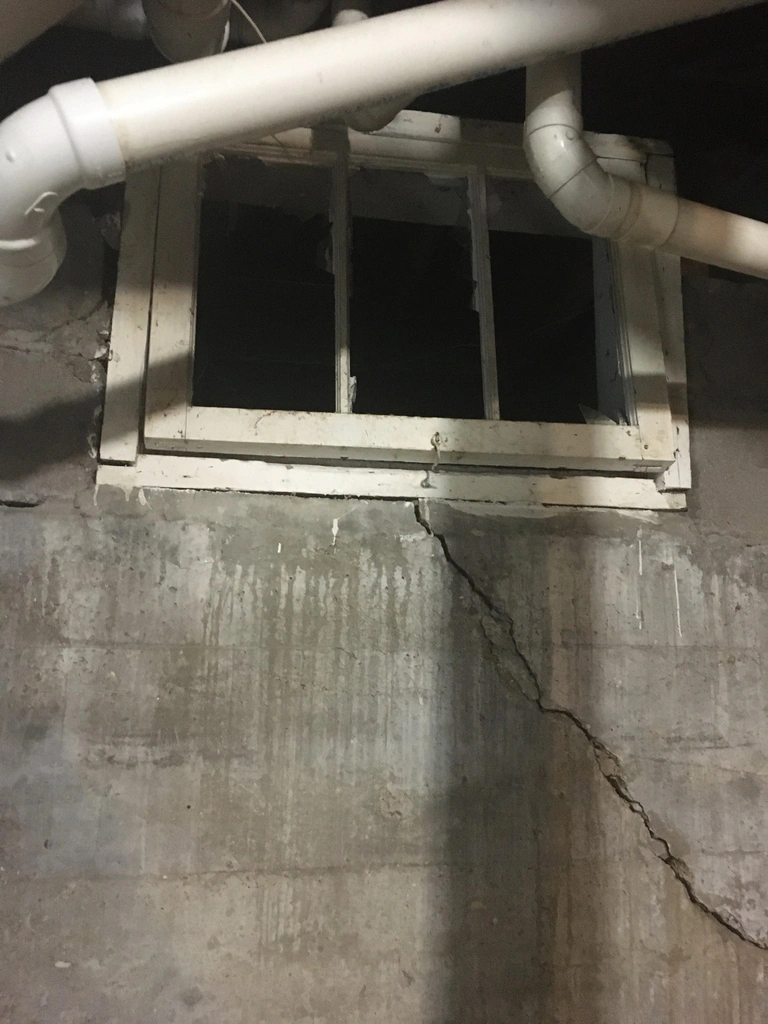
The objects on the floor can act as a tripping or slipping hazard, which could result in injuries. As opposed to the outdoors, the interiors of the buildings are not orange; nonetheless, the same factors (i.e., the visibility, temperature, humidity, and air quality) are present to a lesser extent. Whilst not in terrible condition, the infrastructure of the buildings is damaged in random areas with dents, holes, and cracks, as well as ceilings dripping contaminated water being common.
The insides are poorly lit up by exposed light bulbs that may occasionally flicker. Touching the light bulbs, whether they are activated or not, is unadvised, as it could potentially electrocute one. The interiors give off a distinct smell that is described to be a mixture of rotten fish and eggs, which grows stronger within kitchens and laundry rooms.
The walls in these specific locations are plastered with a dried maroon substance, hypothesized to be the origin of the rotten fish-like smell. This has further led some to believe the substance is dried blood of an undetermined lifeform. Moreover, Cashew Water is dispersed through the faucets and showers of Level 38's buildings.
Electronic devices throughout Level 38 display a range of abnormal behaviors. Screens frequently show only static, radios transmit unintelligible voices, and heating or cooling appliances often operate in reverse. Some ceiling fans are equipped with sharpened blades capable of inflicting serious injury. Staircases rarely lead to their intended destinations, instead passing through walls and emerging in neighboring buildings.
Buildings may be larger on the inside than they appear from the outside. Two identical structures can contain entirely different layouts, with rooms varying greatly in size, shape, and function. Hallways sometimes terminate abruptly at blank walls, even when they seem continuous from an external view. Storage closets have been found that contain spaces much larger than the building itself. Despite these irregularities, no structure has been observed to extend infinitely; every explored interior eventually ends.
Doors are prone to anomalous behavior. Some refuse to open despite being unlocked, while others provide access to rooms belonging to distant buildings, regardless of physical separation. This phenomenon changes unpredictably, rendering mapped routes obsolete. Marking doors is ineffective, as identifying features such as scratches, paint, or labels tend to vanish within several hours.
Windows initially display the expected exterior view, but prolonged observation can result in the appearance of unfamiliar buildings, new pathways, or architectural alterations not present in reality. Looking away and then returning to the window typically restores the original scenery. Photographs seldom capture these discrepancies, suggesting the anomaly primarily affects direct observation.
Electrical systems function even though there’s no visible power grid. Circuit breakers and fuse boxes are either empty or permanently sealed, and power can’t be cut from any structure. Even damaged fixtures often keep working after being disconnected. Lighting is generally dim and unreliable, but sometimes a brief surge will cause every working light in several buildings to flare up at once for a few seconds before fading back to normal.
Despite the town’s abandoned look, small signs of recent activity are common. Chairs might move slightly, cabinets stand open after being closed, and small objects switch places without explanation. No one has ever seen anything move, and surveillance gear has never caught the process on film. Even though these incidents are harmless, they’ve fueled rumors that Level 38’s interiors aren’t truly empty. = The Computers =
Desktop computers and televisions are some of the most common electronics found in Level 38’s buildings. Most of the CRT monitors and a few flat-panel screens stay powered on, even though there’s no sign of any working electrical system. When switched on, the computers start up instantly and display an unknown operating system with no logos or branding. Besides simple apps like a file browser, calculator, and text editor, the main feature is a web browser connected to a search engine called only “Search.” Even without any real Internet connection, every computer can access this service.
The search engine works much like any normal one, but its results are unpredictable. Searches for topics like math, history, or science usually give accurate answers. However, anything related to the Backrooms, Level 38, nearby levels, known groups, or specific wanderers often leads to confusing or contradictory results. Many links go to sites with strange domain endings like .fog, .sea, .drift, or .void. Most of these pages are incomplete, filled with corrupted images, odd weather reports, or maps showing coastlines and towns that don’t exist anywhere else.
Some websites turn up again and again no matter which computer is used. One archive lists thousands of mysterious maritime incidents, many involving ships that can’t be found in any real-world record. Another shows an interactive map with a coastline that changes every time the page reloads. There’s also a site that is just a long list of dead links, each with a timestamp set decades into the future. Trying to save or copy any files from these websites never works—downloads vanish as soon as the computer shuts down or gets moved.
Every so often, the search engine gives results that seem to react to the user’s situation. Some wanderers have found pages describing conversations they just had, inventories of what they were carrying, or directions to places they planned to visit but hadn’t told anyone about. These results disappear as soon as the browser refreshes and can’t be triggered on purpose. Because of this, the M.E.G. warns against trusting anything found on these computers for navigation or important decisions, no matter how helpful it looks at first. = The Ocean =
Traveling far enough in one direction through the town eventually leads to a quiet, lifeless ocean that stretches on with no visible end. Getting to the shoreline can take time, as the repetitive layout of Level 38 makes navigation confusing and compasses do not work properly. The coast is made up of jagged rocky beaches dusted with sand, scattered with plastic debris and leaking pieces of metal.
The ocean here is heavily polluted, making the water unsafe to drink without serious filtration. Fog hangs thick above the waves, never changing in density, and limits visibility to about eighteen meters. Old, rusting sailboats and rafts are scattered across the water, but none can be used for travel—strong winds shred any sails, and none of the boats have paddles.
The sea in Level 38 is unstable in unusual ways. The ocean floor shifts with no warning—a wanderer might be standing in shallow water one moment, then suddenly drop as the seabed sinks away. There are no visible signs before this happens, and the water is too cloudy to see through. Another oddity is the presence of colored lights shining through the fog. These lights change in brightness and hue, and approaching them may lead to another level, though it is unpredictable and can take a long time.
Because the ocean’s depth is so unpredictable and safe floating objects are rare, as well as the uncertainty of reaching a new level by heading toward the lights, this method is not considered a reliable exit from Level 38. The source of the lights remains unknown, though sometimes the outline of structures can be seen through the fog where the lights appear.
Should a wanderer adventure even deeper into the ocean, they periodically will hear the sounds of ship horns becoming progressively louder, suggesting it is seemingly headed towards them. Waves will also be generated that move outwards, akin to water moving in response to an actual ship sailing through. Nonetheless, a ship possibly producing these noises has never been seen. This phenomenon is reported to give wanderers in the vicinity a sense of paranoia and anxiety.
Beyond the area where ship horns are most often heard, the ocean in Level 38 becomes increasingly confusing. Distances start to lose meaning—things close by can seem much farther away, while far-off shapes sometimes look just out of reach. Many wanderers who try to travel straight across the water end up looping back to where they started, even when using marked routes or floating markers. This effect doesn’t seem to be caused by normal navigation errors; nothing so far has helped people move in a truly straight line.
Strange debris can sometimes be seen floating on the water. Shipping containers, navigation buoys, broken lifeboats, rusted anchors, and pieces of unknown machinery drift in and out of sight. These objects usually look like they’re sitting still, but they’re almost impossible to reach—no matter how long one travels toward them, they remain out of reach or vanish into the fog. On the rare occasions someone does get close, the debris either sinks quickly or disappears before it can be examined.
Sound behaves strangely over the open water. In addition to the familiar ship horns, wanderers often hear distant voices, clanging metal, bursts of static, or the rattle of chains. The noises seem to come from every direction at once, making it impossible to find their source. Audio devices easily pick up these sounds, but analysis never reveals any real pattern or understandable speech. Where these sounds come from is still unknown.
The fog itself is odd. No matter the weather, its thickness never changes, and even the strongest winds don’t move it. Bright lights barely shine more than a few meters ahead before fading into the haze. Sometimes, flashes within the fog reveal the outlines of giant structures—cranes, ships, or platforms—but no group has ever managed to reach them.
Spending long periods on the ocean can affect the mind. After a few hours, many wanderers start to feel watched by something hidden in the fog. Some become uneasy about turning their backs to the water, or feel a strong urge to keep looking behind them. These feelings usually go away after a few hours on land and don’t seem to cause any long-term problems.
Because of the shifting waters, navigation problems, and other hazards, the M.E.G. considers offshore exploration in Level 38 to be very dangerous. Expeditions are only recommended when truly necessary, and only for well-prepared groups carrying extra supplies and communication gear. While the distant lights in the fog might offer a way out of the level, the risks of crossing the ocean usually outweigh the dangers of staying within the town itself. = Enviroment =
“Marching against the excessive, roaring winds paired with millions of grains of sand hitting us was like pushing an invisible concrete wall. I could barely hear my co-explorer yell for help for a split second, which faded uncannily quickly in the violent sandstorm; when I took a glance at him, his drifting pair of shoes was only what remained of him.”
Level 38 has hazy, arid, humid, and poor air quality conditions that are prevalent throughout the level, with temperatures reaching as high as 32°C (89.6°F), and humidity levels reaching as high as 88%. These qualities always fluctuate suddenly without any warning, which in some cases, can be too drastic of a change for one to handle. To add more fuel to the fire, other extreme weather phenomena, namely strong winds and sandstorms, can occur every once in a while. One can tell when a sandstorm is about to commence when the sky becomes a darker hue of orange. However, the origin of the sand cannot be traced, as anyone who travels to the outskirts of the level will encounter the same repetitive landscape or the ocean.
Being caught in a sandstorm may cause sand to enter one's eyes, irritating or temporarily blinding them; scrape exposed skin hard enough to create minor to relatively deep scratches; and slip uncareful wanderers as the sand is deposited on the ground. Despite what may be suggested, the risk of being buried by sand is low due to sand piles collapsing against the intense winds. Any object not firmly connected to the ground or inside a building is vulnerable to being tossed around or thrown into random locations by said winds, injuring or killing any wanderers in the proximity depending on the object and its momentum.
Visibility drops quickly during severe weather in Level 38. In the worst sandstorms, it can be impossible to see more than three to five meters ahead, making it nearly impossible to navigate. The town’s repetitive layout becomes even harder to tell apart, and wanderers often get lost even when trying to walk in a straight line. Compasses, GPS devices, and other tools remain unreliable, so travelers must depend on memory or landmarks—which are often hidden by the swirling sand.
The winds themselves behave strangely. Instead of blowing in one direction, gusts can suddenly switch or even circle around certain spots with no clear reason. Lightweight debris sometimes floats in the air for a long time before shooting away at high speed. The same happens with roofing, branches, and metal objects, all of which can be dangerous to anyone nearby. It’s strongly recommended to take shelter as soon as the wind starts picking up.
After major storms, a fine layer of orange sand covers everything, sneaking into buildings through the smallest cracks. This sand is unusually sticky, clinging to clothes, gear, and skin even though it feels dry. While it isn’t chemically unusual, the sand can jam and damage mechanical parts if left uncleaned. Electronics, cameras, and firearms are especially likely to fail after exposure unless they are thoroughly cleaned.
Storms in Level 38 are dangerous but usually don’t last long. Most end within twenty minutes to two hours, often stopping suddenly—wind drops, and the sand settles in seconds. Still, the M.E.G. recommends waiting a bit longer before moving on, since a second wave of strong winds can hit unexpectedly after the first storm ends, often catching wanderers by surprise. = Air Quality Analysis =
M.E.G. analysis, 2013
The primary threat to everyone who enters Level 38, regardless of their health or age, is the poor air quality. The quality of the air does vary in some areas, but can be harmful even in small doses. Via sampling, M.E.G. operatives were able to determine some pollutants of the air quality, although there could be additional undiscovered ones in the skies. The following discovered pollutants are as follows :
Paired with the arid conditions of Level 38 the fatality rate of those without the right equipment is high, and the rate continues to increase. The following symptoms of exposure to the air quality of Level 38 are:
=Common Symptoms=
=Uncommon Symptoms=
Furthermore, prolonged exposure to the air quality of the level can lead to a stroke, heart attack, or premature death. These symptoms will continue to remain even after a wanderer escapes Level 38; hence, they should seek medical attention immediately once they notice other wanderers. For the best chances of survival in Level 38, one must wear a mask that can filter out the pollutants of the air quality, with N95 and KN95 masks being the highest quality and most recommended. If a wanderer does not possess either, surgical masks or scarves placed over one's nose and mouth are the next best options. In addition, eyewear like goggles are recommended to prevent particles from entering one's eyes.
Although the buildings have slightly better air quality, it is still unadvised to take off any protection against the poor air quality if inside them, as the houses are exposed to the outside through open windows, doors, and cracks in their walls. Moreover, they do not have any air purification in their ventilation system, with some buildings not even possessing a functional ventilation system. If one does not utilize any sort of protection against Level 38's air quality, they are strictly advised to not set foot in the level under any circumstances, as the symptoms will most likely go into effect before the wanderer can escape.
= Entities =
Windows can inhabit the houses of Level 38, and Smilers sometimes exploring the outside of Level 38, although the level itself has something unheard of...
Sulfur dioxide;
Nitrogen dioxide;
Carbon monoxide;
PM2.5;
Ozone.
Headaches;
Mild coughs;
Phlegm production;
Sore, watery eyes;
Irritation.
Dizziness;
Chest pains;
Extreme coughs;
Shortness of breath;
Wheezing;
Irregular heartbeat.
The False Sun
The False Sun is a massive, luminous entity permanently suspended above Level 38's thick orange haze. Although it resembles a dim orange sun, it is not visible through conventional astronomical observation and exhibits behavior inconsistent with any known celestial body. The entity remains fixed at approximately the same apparent position regardless of the time spent within the level, contributing to the perpetual twilight experienced throughout Level 38.
Direct observation is difficult due to the dense atmospheric haze. During periods of lower visibility, the entity appears only as a diffuse orange disc. However, when the haze temporarily thins following strong winds, its appearance becomes considerably more unsettling. Rather than possessing a smooth surface, the False Sun is covered slowly shifting dark fractures that resemble cracks in cooling glass. These fractures continuously change position over several hours without following any discernible pattern.
Despite resembling the Sun, the False Sun does not emit measurable ultraviolet radiation or the expected amount of solar heat. Instead, it appears responsible for many of the atmospheric anomalies present throughout Level 38, including sudden changes in humidity, temperature, and wind intensity. Meteorological data collected by the M.E.G. has revealed that these environmental fluctuations frequently coincide with subtle changes in the entity's brightness.
The False Sun displays no signs of intelligence and has never been observed descending or changing its position within the sky. Instead, it exhibits several repeating phenomena. Approximately every few hours, the entity briefly increases in brightness for several seconds. During these "solar pulses," electronic interference becomes noticeably stronger, radio transmissions fill with static, and computer terminals connected to the anomalous "Search" engine frequently display corrupted pages or entirely blank results.
On extremely rare occasions, observers have reported witnessing the dark fractures across the False Sun slowly widening. Whenever this occurs, sandstorms typically develop within the next thirty minutes. Although no causal relationship has been confirmed, every documented instance has preceded unusually severe weather conditions.
Several expeditions have attempted to photograph the entity using telescopes and high-powered lenses. While successful images have been obtained, the resulting photographs differ significantly between cameras taken at the exact same moment. Some depict a normal orange sun, others show an irregular sphere covered in geometric cracks, while a small percentage contain no visible object at all despite being aimed directly overhead.
Spectroscopic analysis reveals that the light emitted by the False Sun does not correspond to any known stellar source. No heat output matching its apparent size has been detected. Attempts to measure its distance have produced conflicting results, with estimates ranging from just a few hundred meters above the level to distances that defy astronomical scale.
There is no consensus regarding the true nature of the Smog Sun. Some researchers suggest it is not a physical object at all, but a persistent atmospheric phenomenon projected above Level 38. Others propose that it may be a massive stationary organism, its real structure hidden by the constant haze. = Entrances & Exits =
= Entrances =
There are 10 known entrances to enter Level 38. = Exits =
There are 3 known exits in Level 38, although they are very hard to find due to the polluted air. = Footnotes =
= Gallery =

Upon this isle, by water tight embraced, A township finite, silent, still, and strange— Where homes and plazas, brick-laid paths are traced, Their forms in borrowed splendor interchanged. Mexican courts with Omani domes rise, Turkmen design in sun-bleached white adorned, Gold glints and silver trims catch weary eyes, Yet all beneath a smoky orange mourned.
The air hangs thick, a pungent, stifling shroud, No dawn nor dusk doth mark the passing time; A haze, unbroken, weaves a constant cloud, And chokes the breath of stone and root and vine. Here gardens line the walkways, rocks and palms, Though most are torn by wind’s relentless hand; No bee nor moth bestows its gentle balm, No fruit nor seed springs forth from this parched land.
Yet some green life endures in spite of blight, Its secret stubbornness unknown to all— Perchance this ruin dawned but yesternight, And plants persist until the final fall. Beware the earth, for sudden it may break, A hole to swallow careless step or stride; The sinkholes gape, then close as if to wake And drink the lost, their fate in darkness tied.
Below the ground, no wonders wait to see, Save waters pooled in silent, empty wells— So stands Level 38, lost to the sea, A town of faded gold with ghostly smells.
Going through a gap glowing orange instead of white in Level 37.
Entering a room where the light shines jarring orange instead of soft pink in Level 37.2.
Breaking through a wall of one of the houses within Level 37.9 may occasionally lead here.
Exiting through a gate sometimes found in the wall surrounding a house in Level 37.9 also leads to this level.
Walking through an orange fog that may appear in any escapable level.
Going inside an abandoned white blocky building in Level 91, which will seamlessly transition here should they exit the building.
Feeling the air quality becoming progressively worse in Level 109 indicates a smooth transition to a house here.
No-clipping to a window frame resembling the windows of Level 38's buildings in the upper floors of Level 22.
Seeing pale orange fog settle in Level 7, which in some conditions will transition the level into this level's ocean.
A very hot area in Level 994 can make one faint due to heat stroke and wake up in an area of Level 38.
Venturing deep enough into the level will lead one to Level 39.
2 exits can be performed by approaching specific lights in the level's ocean:
Approaching neon blue lights outlining a roller coaster may bring one to Level 995.
Staring at a large circular dark blue light in the sky for a couple of seconds will take one to Level 306.
Sources
Adapted from the original article, under CC BY-SA 3.0.